
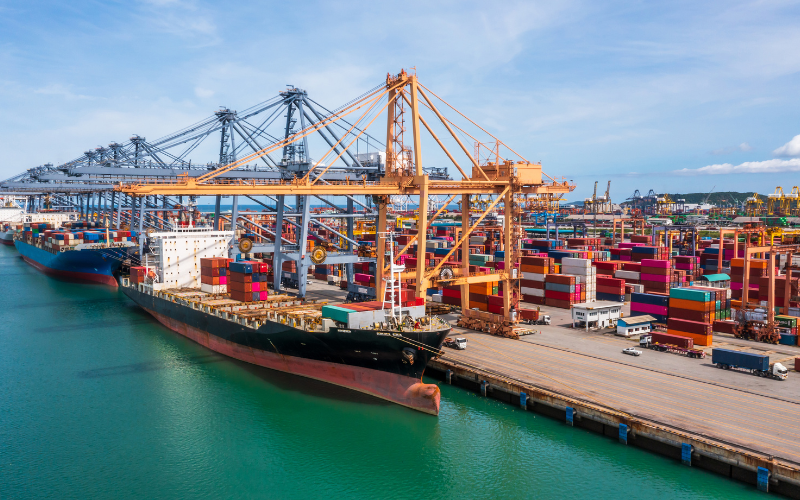
Moving bulk cargo between Turkey and Italy requires more than reserving space on a vessel or truck. A freight forwarder coordinates transport, cargo handling, export and import procedures, documents and communication across the supply chain. When comparing freight forwarders Turkey Italy bulk cargo, define the commodity, volume, loading method, route, delivery point and trade terms before requesting a price.
What Does a Bulk Cargo Freight Forwarder Do?
A freight forwarder organises the movement of goods for an importer or exporter. Depending on the agreed scope, services may include transport planning, carrier booking, port and terminal coordination, customs brokerage, document preparation, cargo insurance arrangements, warehousing and final delivery. Ask whether the provider acts as an agent or contracts as a principal for particular services, and review its liability terms.
Choose the Right Transport Mode
Sea Freight
Sea freight is often considered for large volumes, heavy commodities and shipments where transit time is less critical than unit cost. Depending on the commodity and handling requirements, cargo may move in standard containers, open-top or flat-rack equipment, or as breakbulk and other non-containerised cargo. Not every port or carrier can handle every commodity or loading method.
Road Freight
Road transport may suit palletised or time-sensitive shipments and can provide door-to-door flexibility. Check border processes, transit permits, vehicle capacity, route restrictions and whether the goods require special securing, temperature control or other handling.
Multimodal Freight
Combining road, sea and rail can balance cost, capacity and transit time. Ask who is responsible for each leg, where cargo changes hands, how tracking works and who coordinates if a connection is missed.
Information to Give a Forwarder Before Quoting
Provide a full commodity description, HS code if known, quantity, gross and net weight, dimensions, packaging, loading method, pickup and delivery addresses, cargo-ready date and required arrival date. State whether the goods are hazardous, oversized, temperature-sensitive, high-value or subject to special controls. For bulk material, clarify density, moisture limits, contamination controls and the equipment required for loading and discharge.
Documents Commonly Required
Requirements vary by commodity, customs regime, route and parties involved. Common shipping documents can include:
- Commercial invoice and packing list, where applicable.
- Bill of lading for sea freight or the appropriate road or rail transport document.
- Export and import customs declarations.
- Certificate of origin or movement certificate when required by the transaction and customs treatment.
- Commodity-specific permits, safety data, inspection documents, or sanitary and phytosanitary certificates where applicable.
- Insurance certificate and instructions if cargo insurance is arranged.
The European Commission explains that Turkey and the EU have a customs union for covered industrial goods, but agricultural products and coal and steel products are treated under different arrangements. Do not assume every commodity has the same customs treatment. Review the Commission’s Turkey customs-union guidance.
Customs and Transit Considerations
EU import procedures require customs clearance before goods can circulate in the EU customs territory. The relevant customs declaration, safety and security data and any commodity-specific restrictions must be arranged according to the route and goods. The European Commission also notes that common transit procedures apply to Turkey, which can be relevant to goods moving through multiple countries. See the official guides to EU importation and customs transit.
Understand Incoterms and Who Pays Each Charge
Incoterms allocate certain delivery responsibilities, costs and risk between seller and buyer. They do not replace the transport contract, customs law or payment agreement. Ensure the quotation uses the agreed Incoterm and identifies the exact named place or port. Confirm who handles export clearance, import clearance, unloading, terminal charges and final delivery.
Compare the Full Logistics Cost
A low line-haul rate can hide charges elsewhere. Ask for an itemised quotation showing origin handling, export documentation, customs brokerage, freight, fuel or security surcharges, terminal handling, destination handling, storage, demurrage, detention, unloading and final-mile transport. Confirm the quote’s validity period and which events can trigger a rate adjustment.
How to Select a Turkey–Italy Forwarder
Evaluate the company’s experience with your commodity and route, carrier relationships, customs capability, insurance options, tracking, claims process, financial stability and local representation at both ends. Ask for references from comparable shipments. Confirm that the company can arrange port-side operations and delivery in the exact regions you need.
Common Mistakes to Avoid
- Providing vague commodity descriptions or incorrect weights and dimensions.
- Assuming every cargo type can travel in a standard container.
- Failing to agree who is responsible for customs declarations and duties.
- Ignoring storage, demurrage, detention and port cut-off dates.
- Selecting a provider only because its headline freight rate is lowest.
Frequently Asked Questions
Is sea freight always cheapest for bulk cargo?
Not always. Total cost depends on volume, commodity, route, port handling, delivery distance and urgency. Compare door-to-door alternatives.
Can a forwarder arrange customs clearance?
Many forwarders coordinate customs brokerage, but confirm the scope and identify the importer or exporter responsible for legal declarations and duties.
Should cargo insurance be included?
Discuss coverage, exclusions, valuation, deductible and claims procedures. Carrier liability may not equal the cargo’s full commercial value.
Conclusion
The right freight forwarder for Turkey–Italy bulk cargo should understand the commodity, transport mode, origin and destination handling, customs requirements and full landed logistics cost. Give providers precise shipment data, compare itemised quotations and agree responsibilities in writing before the cargo is released.

Doris Pollard, a mesmerizing wordsmith and experienced blogger, crafts narratives that carry readers into unexplored realms. Infused with insightful perspectives and vibrant storytelling, Doris’s mastery of language captivates both hearts and minds, making an enduring impression on the literary landscape.